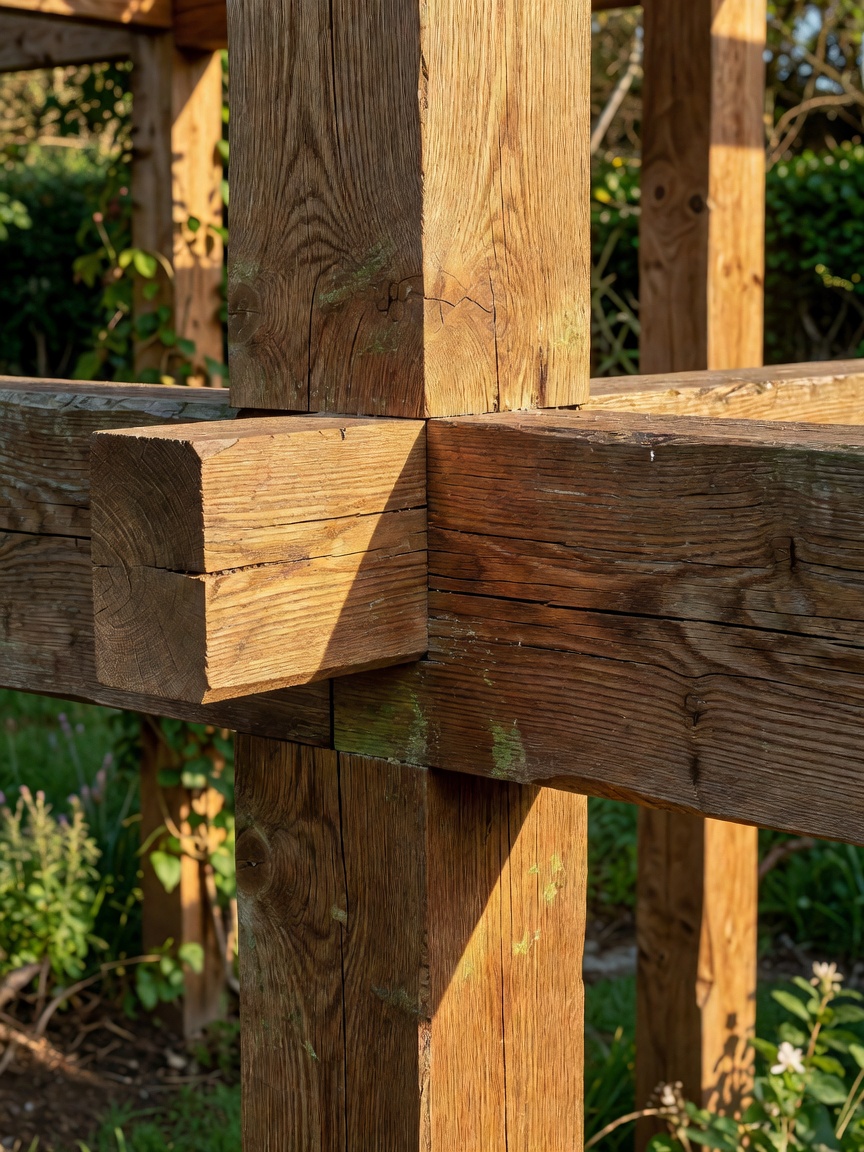
Start with where the wood will live
Timber is a useful cottage garden material because it can be modest, tactile and repairable. Its performance depends on more than the species name. Ground contact, persistent damp, exposed end grain and details that trap debris all influence how a piece ages. Begin by separating above-ground decorative work from parts that will sit close to soil or hold wet growing media.
A supplier should be able to explain the product specification and intended exposure. Pressure treatment is not one uniform promise of suitability, and naturally durable species are not immune to poor detailing. The heartwood and sapwood of the same species can behave differently. Ask precise questions rather than accepting “outdoor wood” as the complete description.
Compare the whole material choice
| Option | Useful qualities | Questions to resolve |
|---|---|---|
| Treated softwood | Widely available and often easy to replace | Treatment specification, cut-end instructions and intended use |
| Durable heartwood | Can suit exposed outdoor work | Species, sapwood content, sourcing and cost |
| Reclaimed timber | Existing character and potential reuse | Unknown treatments, concealed damage and contamination |
| Modified timber | Products may offer improved stability or durability | Product-specific installation, fixings and ground-contact limits |
Look for responsible sourcing claims supported by documentation. FSC and PEFC certification schemes provide ways to assess supply-chain claims; they do not guarantee that every certified board is suitable for every garden application. For treatment and exposure terminology, a knowledgeable supplier may refer to standards such as BS EN 335. Product suitability still needs to match the proposed use.
Design a planter around water
A wooden planter must contain its growing medium while allowing excess water to escape. Think about the complete route: through the compost, out of the container and away from the underside. A drainage hole blocked against a solid base is not much help. Avoid siting outlets where runoff will create a persistently slippery walkway or wet a building wall.
A suitable liner can separate wet compost from timber, but its installation must preserve drainage. Folded pockets can trap water, and an impermeable sheet wrapped across every opening can turn the box into a reservoir. Follow the liner and planter instructions. A separate gravel layer at the bottom is not a substitute for functioning outlets and an appropriate growing medium.
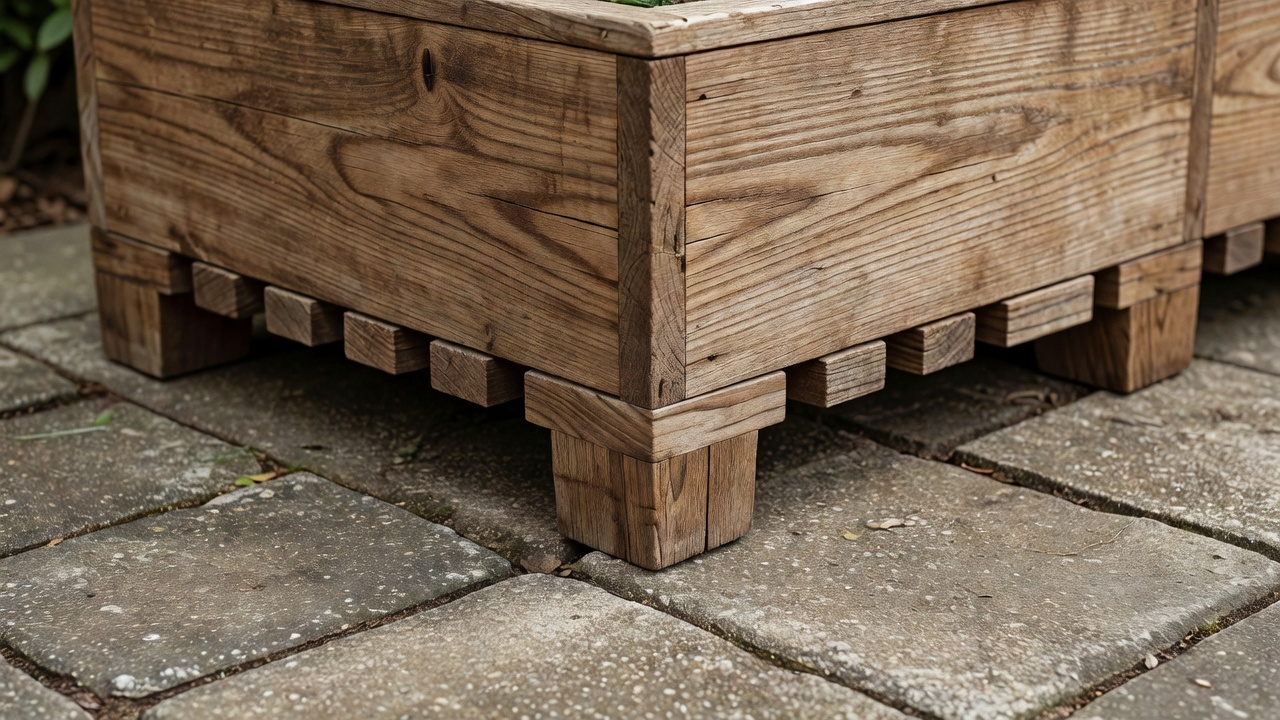
Wet growing media is heavy. Larger containers, raised installations and planters on decks or balconies need appropriate support and, where relevant, a competent assessment of the supporting structure. Do not assume that a visually substantial box or deck can safely carry the proposed load. Keep the design within the maker's stated limits.
Choose fixings and joints together
Outdoor fixings need to suit the timber, its treatment and the exposure. Some combinations promote staining or corrosion. Ask the timber and fixing suppliers for compatible products rather than selecting screws by colour alone. Where timber movement matters, use the maker's recommended fixing pattern and clearances instead of forcing every component rigidly into place.
Mortise-and-tenon joinery can be attractive and effective when correctly designed, but a traditional-looking joint is not automatically weatherproof. Horizontal ledges, open end grain and tight pockets of fallen leaves can retain moisture. For a simple planter, accessible mechanical fixings may offer a more straightforward repair path than concealed, permanently bonded construction.
Be cautious with unknown reclaimed wood
Old railway sleepers, industrial boards and salvaged painted timber can have uncertain treatment histories. Do not use unidentified material for edible-growing containers or frequent skin contact without reliable suitability information. Age and patina are not evidence of safety. Never burn treated or coated offcuts in a garden fire or domestic stove; follow local disposal requirements.
Make care a small regular task
Decide whether you want natural weathering or a maintained coating. Neither choice removes the need for inspection. Clear soil from vulnerable junctions, check fasteners, remove splinters from hand-contact areas and look for softness around bases. Apply coatings only as directed, with proper preparation and drying conditions. No decorative finish can repair structurally decayed timber.
Keep a short record of the product, treatment and finish used. When a board eventually needs replacement, that information is more useful than trying to match an unknown material by appearance. A well-planned timber feature should age with the garden without becoming impossible to mend.